

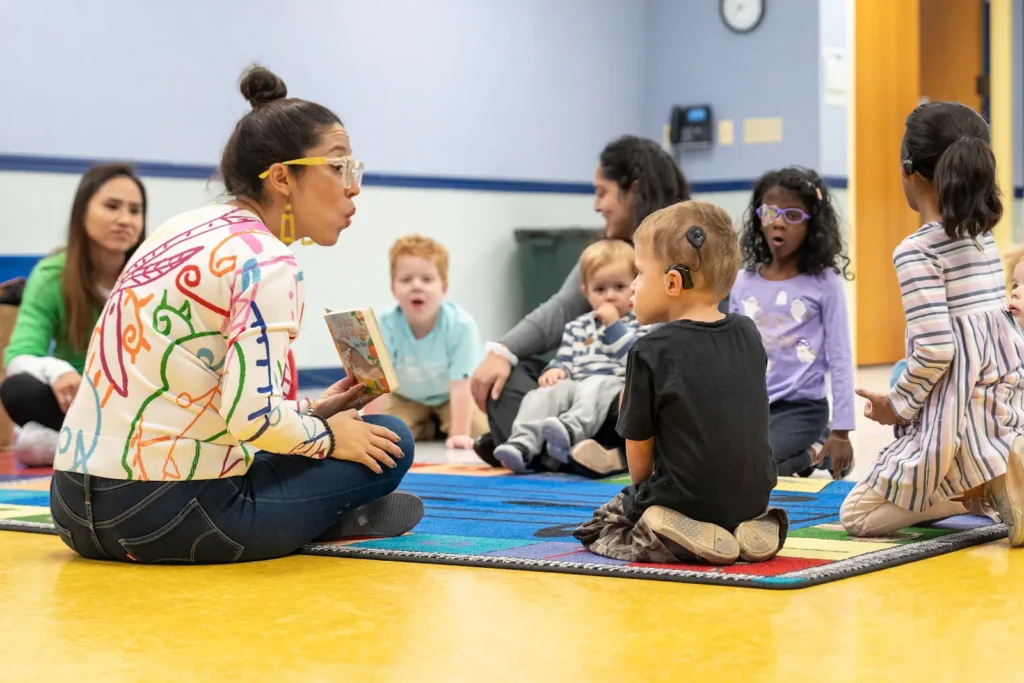
Reading with a child contributes to increased vocabulary, language development, and print awareness. It also benefits child-caregiver relationships and leads to improved literacy skills. For deaf and hard of hearing children, reading books with children with hearing loss can reinforce a healthy self-image and destigmatize the use of assistive devices or ASL.
Read below for our list of recommended reading material for kids of all ages.
Still have questions about how to read with your DHH child? Want more best practices on reading to young children with hearing loss? We’ve compiled a list of best practices here.

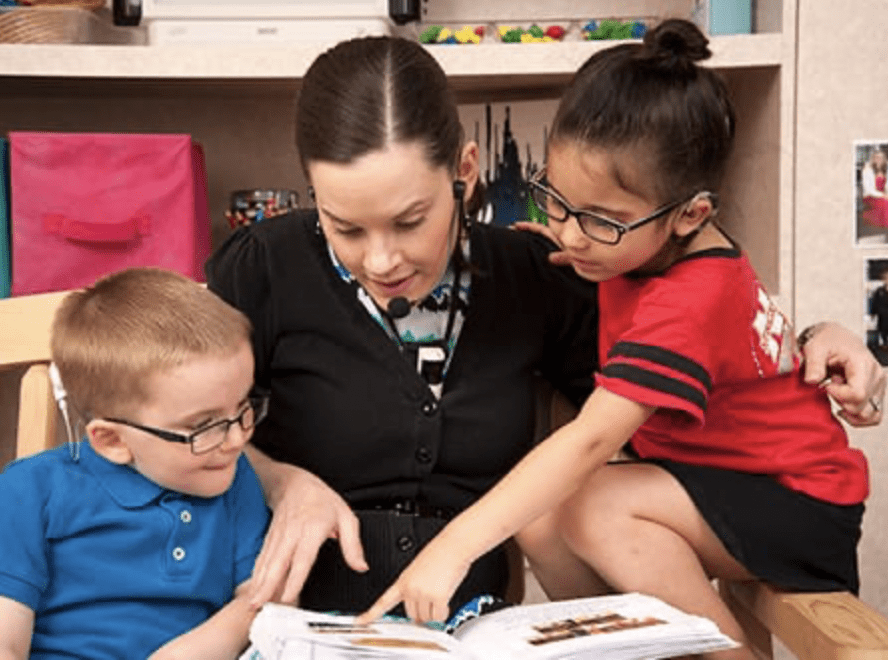
The first time you read the book, focus on what is happening. Identify and label parts of the illustrations, explain what is happening on the page, and clearly state character motivations (example: “The pigeon is giving his ticket to the attendant – he really wants to ride that roller coaster!). Don’t be wrapped up in reading the text word-for-word. That first reading, the goal is to communicate the story and to pre teach any vocabulary or content that may be unfamiliar.
The next time, add in more of the text. Point out repeated words or phrases and add in dialogue (“Do you have a ticket?” “Here’s my ticket!”). As you read more and more, your “reading” can get closer and closer to the text on the page until you are reading the story in a more traditional sense.
Fortunately, kids love to read the same book a thousand times; use that to your advantage! Read in a way that ensures understanding while asking questions “Do you see how many birds are in line to ride the roller coaster?” and relating the text to the child’s personal experiences “Remember when we had to wait to ride the ride at the zoo – just like the pigeon has to wait to ride the roller coaster?”
As the story becomes familiar, pay more attention to what’s on the page. You can use props, roleplay, funny voices or personified signs, and family involvement to make reading engaging and foster an early love of literacy.
This new curriculum provides resources to EI providers so they can support families. With this, we can contribute to a new generation of Deaf and Hard of Hearing readers and be better equipped to meet early language and early literacy milestones.
This blog was written by Maddie Hinkle (she, her, hers). Youth and Family Connections Coordinator with the Chicago Hearing Society. CHS provides services, resources, and supports to Deaf, DeafBlind, and Hard of Hearing folks throughout the state of Illinois. Maddie has an MA from Gallaudet University in Deaf Studies: Early Language Advocacy. MHinkle@Anixter.org



Please note: this list contains Amazon Affiliate links. As an Amazon Associate, FHSR earns from qualifying purchases. Funding from our Amazon Associate program helps support the EARs Book Scholarship and other free programs for families.

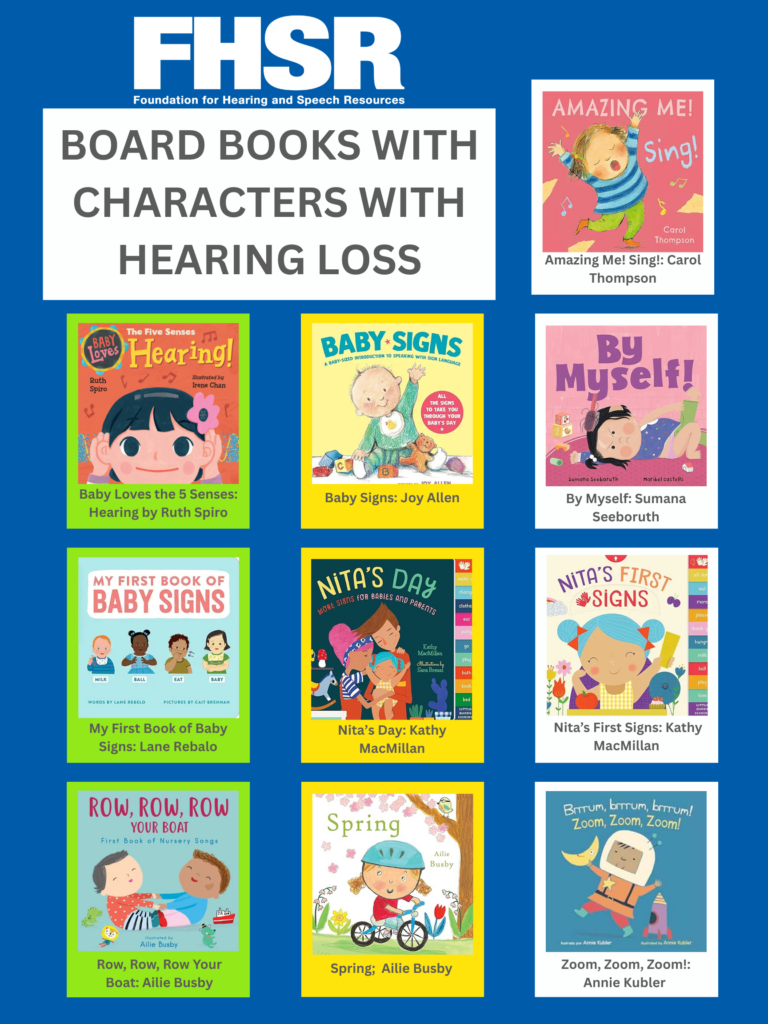
This adorable board book is a great way to introduce infants and toddlers to American Sign Language. The tabs on the side pull out to show signs that follow along with the story and they’re fun, too! Join Nita and her parents through their daily routine and use the winning combination of interaction and visuals to engage your youngest readers.
Go to the full page to view and submit the form.