
TEACHER OF THE DEAF
Becoming a teacher of the deaf is a fulfilling career that blends education, communication, and a deep understanding of Deaf culture. The journey typically begins with earning a bachelor’s degree, ideally in Deaf Education or a related field such as Special Education or general Education. If the undergraduate degree is in another area, aspiring teachers can pursue a master’s degree specifically in Deaf Education. These programs include coursework in audiology, language development, literacy strategies, and often require fluency or proficiency in American Sign Language (ASL). Learning ASL is a vital part of the profession, as many students use it as their primary mode of communication. Proficiency can be developed through formal courses, immersion experiences, and interaction with the Deaf community.
After completing the required education, prospective teachers must obtain state licensure or certification to teach. This process typically involves passing standardized exams (such as the Praxis), completing student teaching placements, and undergoing a background check. Most programs also include hands-on experience through internships or practicums in schools that serve deaf and hard of hearing students. Once certified, teachers of the deaf can work in a variety of settings, including mainstream schools, specialized schools for the deaf, or early intervention programs.
Ongoing professional development is important in this field. Teachers may pursue additional certifications, such as National Board Certification in Exceptional Needs – Hearing Impairments, or attend conferences and workshops to stay current with best practices. Beyond credentials and training, successful teachers of the deaf are those who embrace Deaf culture and advocate for their students’ language access and educational equity. If you’re passionate about language, inclusion, and empowering students, this career path offers meaningful opportunities to make a lasting impact.
HOW TO BECOME A TEACHER OF THE DEAF
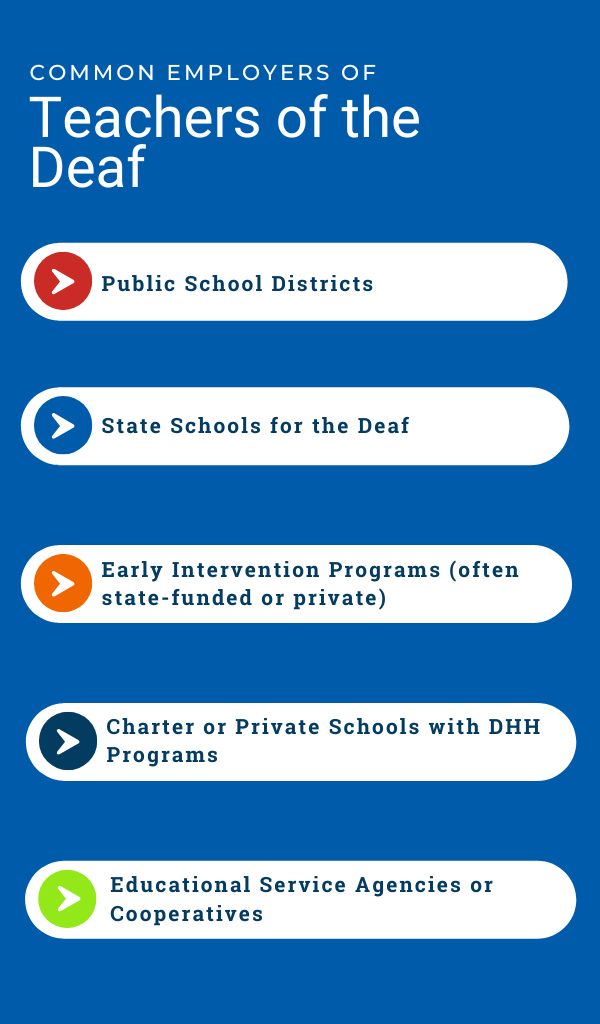
As a teacher of the deaf, there are a variety of job opportunities in different educational and support settings. These roles focus on teaching, supporting communication development, and helping deaf or hard of hearing students reach their academic and social potential. Here are some common job options:
- Classroom Teacher (Deaf Education)
Work directly with deaf or hard of hearing students in:
- Specialized schools for the deaf
- Mainstream schools with inclusion or resource support
- Self-contained classrooms in public schools
These teachers may use ASL, spoken language, or both, depending on the students’ needs and the school’s philosophy (bilingual, oral, total communication, etc.).
- Itinerant Teacher of the Deaf
Itinerant teachers travel between schools to support deaf or hard of hearing students who are mainstreamed in general education classrooms. They:
- Collaborate with general education teachers
- Provide direct instruction and accommodations
- Monitor hearing technology (e.g., hearing aids, FM systems)
- Early Intervention Specialist
Work with infants and toddlers (birth to age 3) who are deaf or hard of hearing and their families. Responsibilities include:
- Providing home-based services
- Teaching communication strategies
- Guiding parents through early language development (spoken language and/or ASL)
- High School or Postsecondary Instructor or ASL Teacher
With advanced education or experience, you can teach:
- Deaf Education or ASL in colleges and universities
- ASL as a second language in high schools or community programs



DONATE TO FHSR
We support our families through every part of their journey, through every age and stage. And you can be a part of it! Discover how you can help us provide great resources—you can even fund a scholarship!