AUDIOLOGY
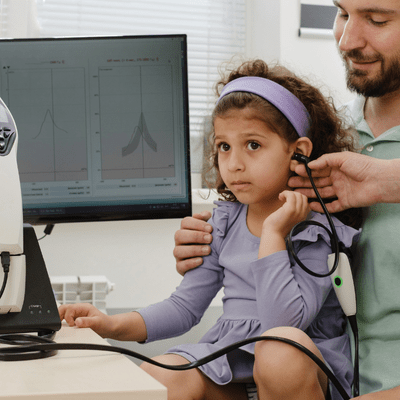
An audiologist is a healthcare professional who specializes in the evaluation, diagnosis, and treatment of hearing and balance disorders for individuals of all ages. Their professional practice includes the following services:
- Assess hearing:
Conduct comprehensive hearing tests to determine the type, severity, and cause of hearing loss. These tests are used as the foundation for treatment services as well as the baseline and ongoing monitoring for hearing conservation to protect from noise or life-saving medications that are hazardous to hearing or balance. - Diagnose balance disorders:
Evaluate symptoms of dizziness, vertigo, and balance problems to identify underlying conditions. - Provide treatment and preventative options:
Recommend and fit hearing aids, hearing protective devices, cochlear implants, assistive listening devices, and other treatments to improve hearing and balance. - Educate patients and family members:
Provide information and guidance on hearing health, prevention strategies, hearing loss management and rehabilitation for tinnitus and related psychoacoustic difficulties. - Monitor progress:
Follow up with patients to track their hearing and balance and adjust treatment as needed. - Collaborate with other healthcare professionals:
Work with physicians, therapists, and other specialists to provide comprehensive care for patients with hearing and balance issues.
In addition to clinical practice, audiologists may also engage in research, teaching, or consulting activities related to audiology.
WHY BECOME AN AUDIOLOGIST?
Becoming an audiologist offers a rewarding career focused on improving the lives of individuals with hearing and balance disorders. Audiologists diagnose, treat, and manage these conditions, helping people communicate better and maintain their quality of life. The field also provides diverse career paths, strong job security, and good earning potential.
Here’s a more detailed look at the reasons to pursue audiology:
To make a difference in people's lives
- Audiologists directly impact the lives of those with hearing and balance issues, helping them hear better, communicate more effectively, and improve their overall well-being.
- The positive feedback from patients, especially when they experience the benefits of hearing aids or other treatments, can be incredibly rewarding.
- Audiologists help people of all ages, from infants with hearing loss to seniors experiencing age-related hearing decline, making it a diverse and impactful field.


Diverse Career opportunities
- Audiology offers a range of career paths, including clinical practice, research, teaching, and roles in hearing aid or cochlear implant companies.
- Audiologists can specialize in areas like pediatric audiology, cochlear implants, or vestibular (balance) disorders.
- They can work in various settings, such as hospitals, clinics, schools, private practices, and research institutions.
Strong Job Outlook and Earning Potential
- The demand for audiologists is projected to grow faster than average in the coming years, thanks to an aging population and advancements in medical care that increase the number of people needing audiological services.
- Audiologists often enjoy competitive salaries, especially those with advanced certifications or who work in high-demand regions or specialized fields, making it a financially rewarding career path.

Rewarding and Engaging Work
- Audiology offers a blend of scientific knowledge, patient interaction, and problem-solving.
- The profession is constantly evolving with new technologies and research, keeping audiologists engaged and challenged.
Opportunities for Research and Teaching
- Audiologists can contribute to the advancement of knowledge through research on hearing and balance disorders.
- They can also teach and mentor future audiologists in academic settings.
- This aspect of the profession allows for further exploration and contribution to the field.

HOW DO YOU BECOME AN AUDIOLOGIST?
Becoming an audiologist requires a 4-year Bachelor’s degree followed by a 4 year Doctor of Audiology degree. The last year of the Doctorate of Audiology consists of an externship placement year at a clinic or research facility.
WHAT ARE THE OPPORTUNITIES IN THE FIELD?
- Audiologists typically work in a variety of settings. Most audiologists are considered “Clinical Audiologists”. It’s estimated that 14%-25% of audiologists work in Hospital settings while 30-47% work in a non-hospital private audiology practice or physicians office. Educational audiologists work in the school system account for 12% Many audiologists work for the Government most notably at Veterans’ Affairs (VA) hospitals and clinics. While the VA is considered the largest single employer of Audiologists they account for 2% of the professional work environments. The remaining work environments include a variety of settings such as hearing technology manufacturing, consultative services and itinerant surgical support.
- As an audiologist, what are some tips for working with children who are deaf and and deaf with disabilities (DWD) (Megan)
- Patient interest to gain trust
Resources

BE A PART OF OUR COMPASSIONATE COMMUNITY.
Change the life of a child with hearing loss.
Every contribution to FHSR helps provide free, high-quality resources to children with hearing loss —and the parents and professionals who support them every day.
Thank you for making a gift to FHSR. Thank you for changing lives.