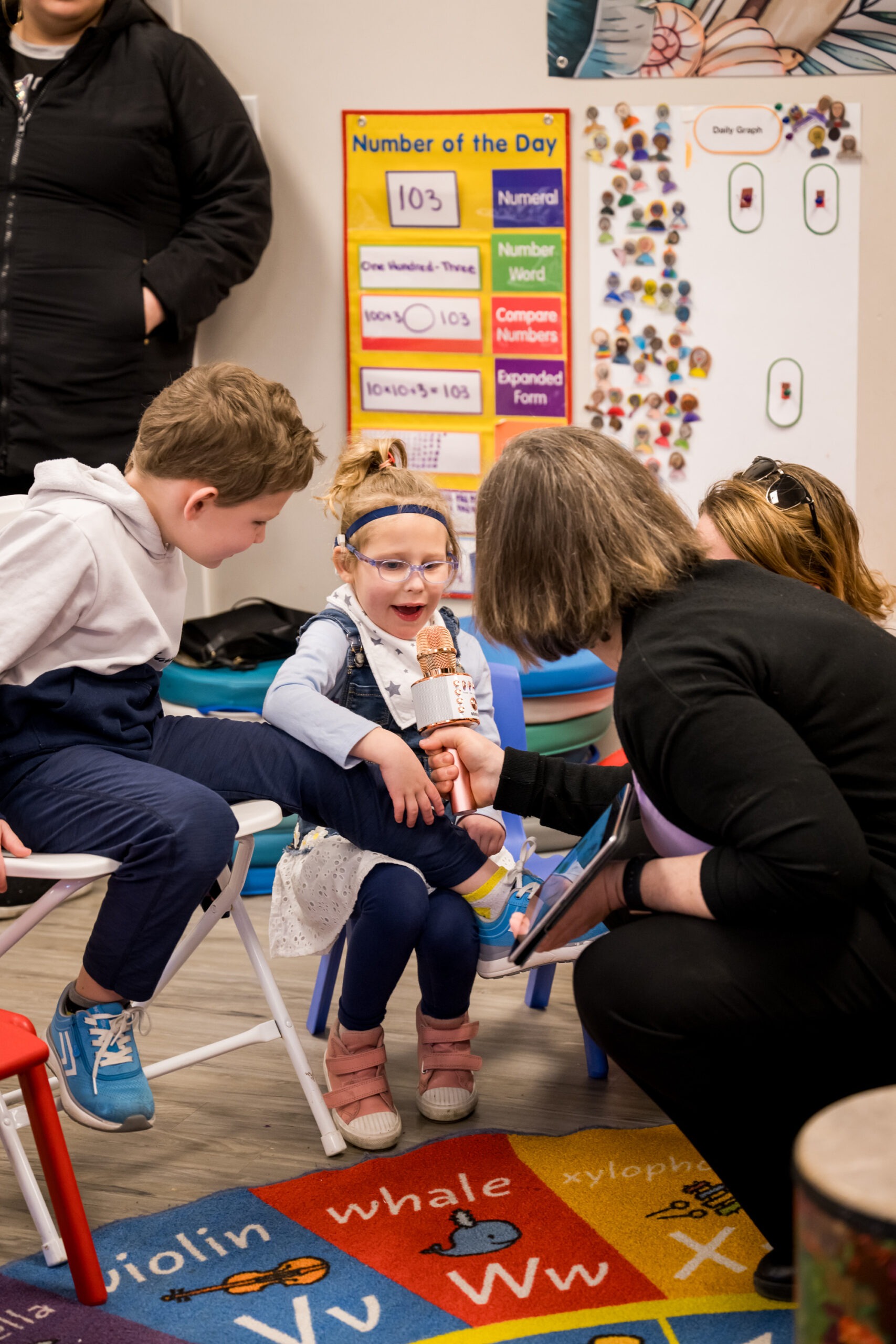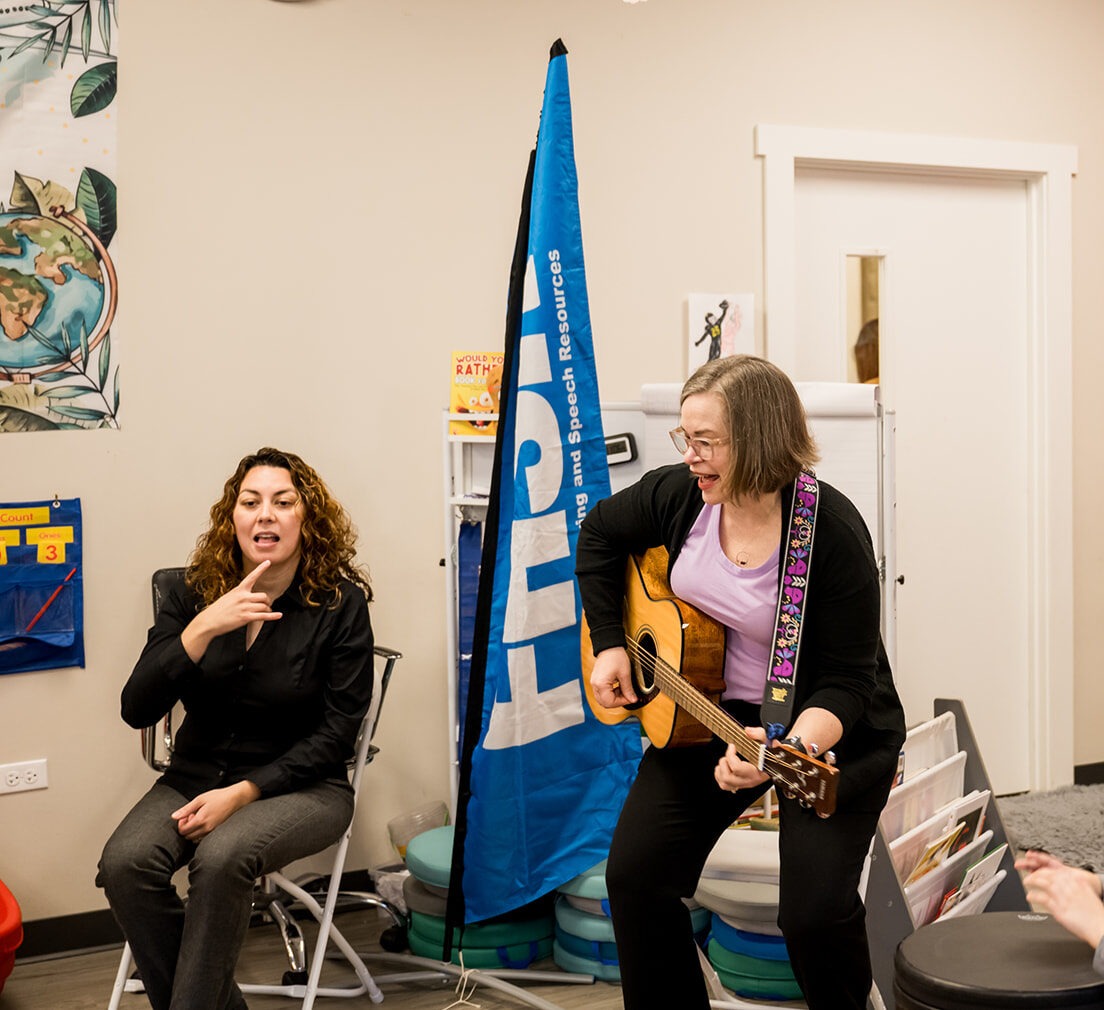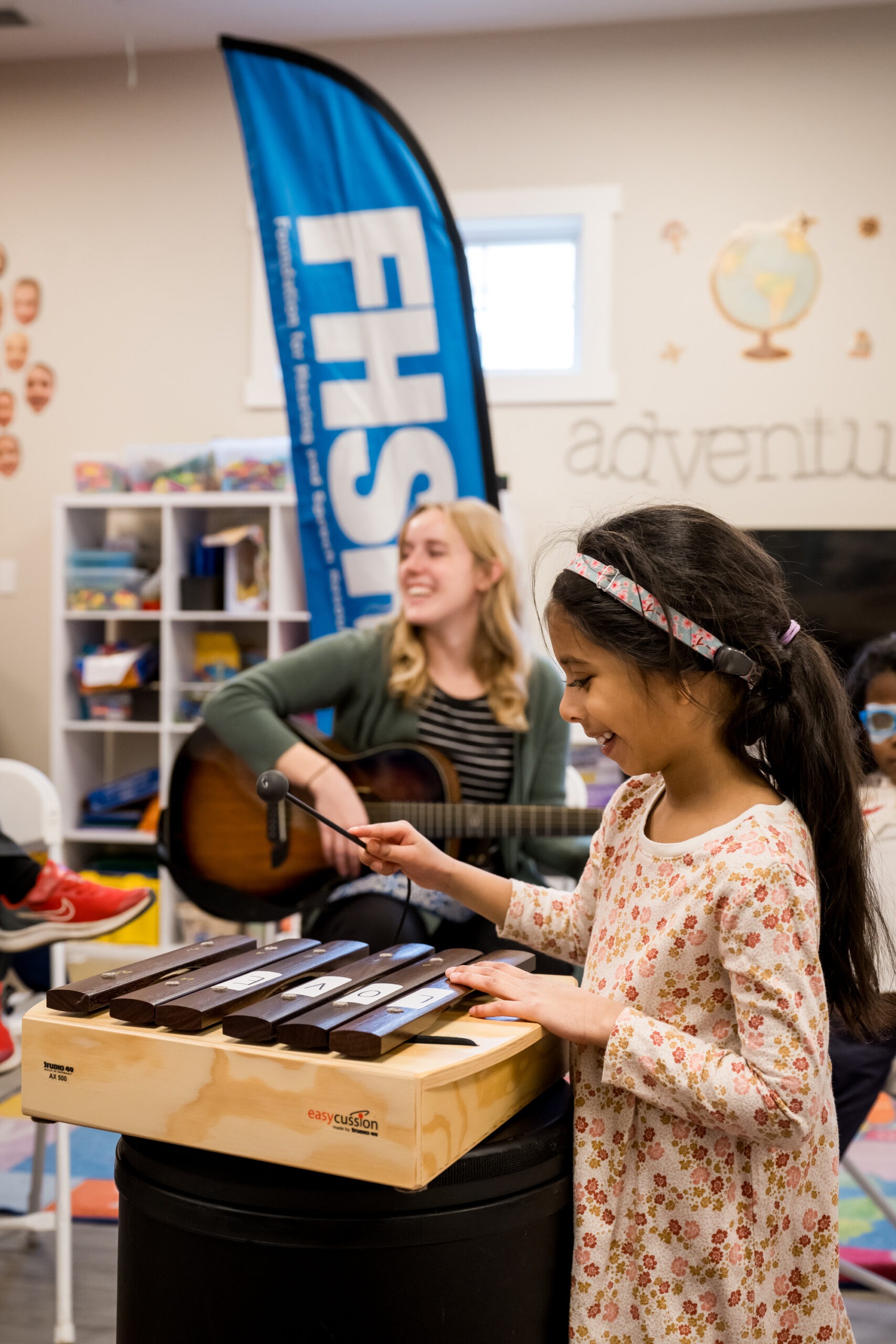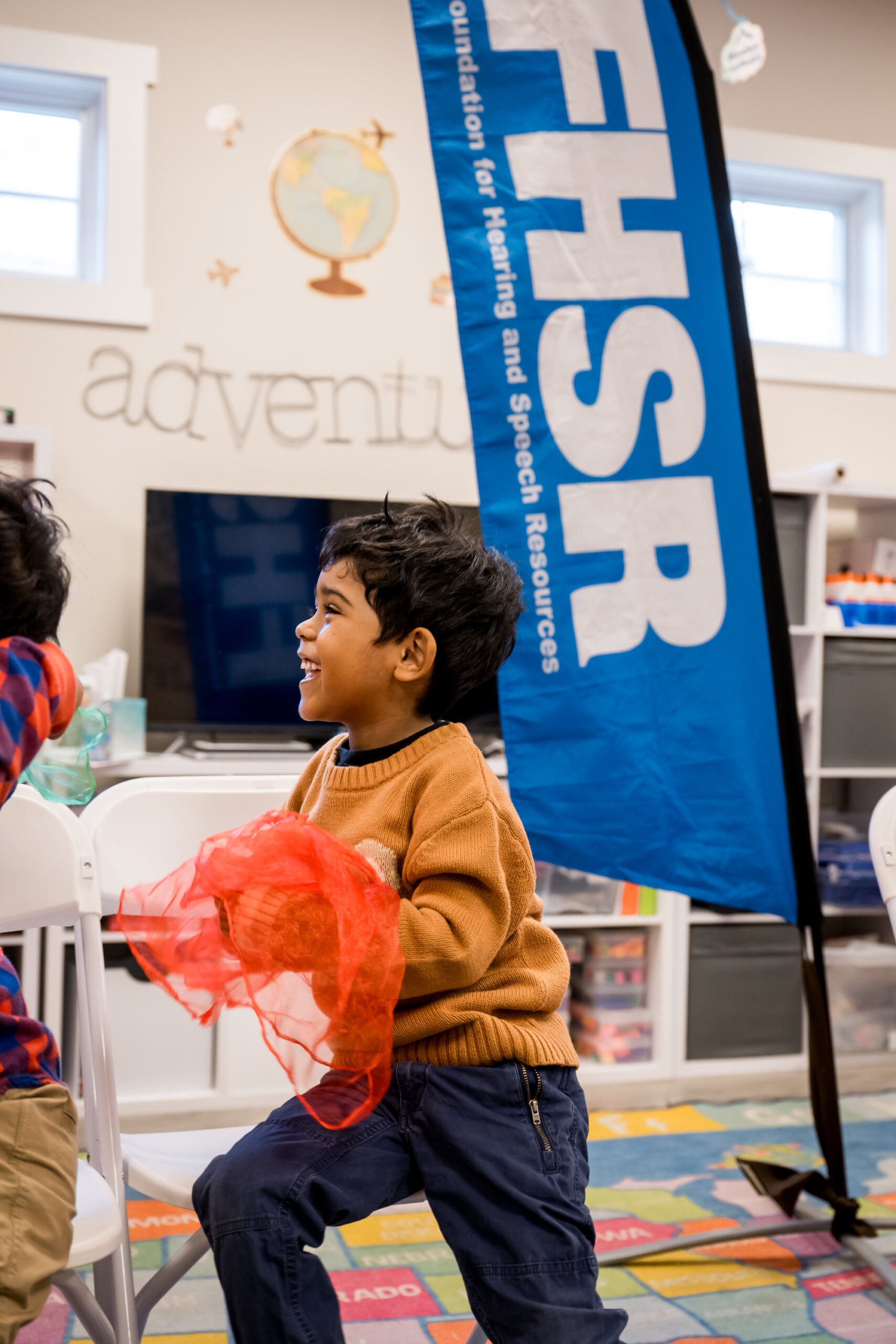
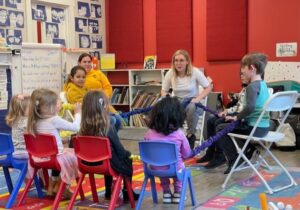
 Based on the groundbreaking work of Dr. Kate Gfeller, FHSR’s tuition-free Music Therapy is designed specifically for children living with hearing loss.
Meeting once a week for an hour over the course of 12 weeks, this interactive and engaging program has the goal of sharpening a deaf and hard of hearing (DHH) child’s listening skills while boosting their self-esteem, socialization, and articulation – all in a fun, musical setting with their peers. Siblings (when of the appropriate age) are able to be included in classes so the whole family can reap the benefits – research shows improved outcomes for DHH children whose siblings actively participate in interventions like music therapy.
FHSR partners with top music therapy group Prospect Music Therapy and lead researcher Laura Pawuk, who holds a PhD in Music and Therapeutic Arts from Eastern Michigan University, to create a specific curriculum. Our professional music therapists were trained with this tool to provide musical experiences that are accessible to kids with a variety of hearing profiles. By offering the curriculum in a small group setting, the music therapists are able to establish accommodations, and take an individualized approach to each child – so everyone in the session reaches their potential – while also having fun!
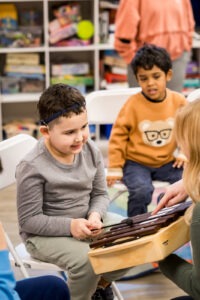 Based on parent & therapist feedback from past sessions, our participants benefitted by engaging in music activities with their peers, resulting in increased listening skills, growth in self-esteem and sound identification. In past sessions every student saw progress on their individualized goals.
The goal of FHSR’s Music Therapy program is to encourage growth in personal enrichment, self-esteem and oral communication. We call it “sneaky therapy” – it’s so much fun, kids don’t even realize that they’re learning!


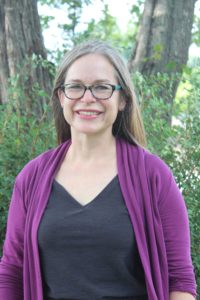 Loren is a board-certified music therapist and the founder of Prospect Music Therapy. She studied music therapy at the University of Dayton and later completed her master’s degree in Creative Arts Therapy – Music Therapy at MCP Hahnemann University in Philadelphia. Loren has experience providing music therapy in a variety of settings including special education, hospice, dementia care, and the medical field. She loves working in Mount Prospect, the community where she lives with her husband, four children, and chihuahua, Skippy.
 Erika earned her bachelor’s degree in Music Theory and Psychology, with a minor in Honors Humanities at Azusa Pacific University. She went on to pursue her equivalency and master’s degree in Music Therapy at the University of Iowa. Erika assisted with research on an National Institutes of Health (NIH) program investigating music perception and enjoyment for cochlear implant recipients at the University of Iowa Hospitals & Clinics Music Perception Lab under the direction of Dr. Kate Gfeller. She conducted her own research about protecting and preserving hearing and presented her findings at a national audiology conference in February 2022. She has experience working with older adults with dementia, multiple disabilities, and other neurological disorders, as well as kids with hearing loss. Erika currently works as a music therapist at Niles Township District for Special Education with kids ages 3-22.
Music is a whole-brain activity that generates physiologic responses. Its predictable and structured nature can improve attention, enhance learning, and expand communication. Music listening and creation are motivating social experiences that can access memories and express or alter emotions.
As music therapists, we feel honored to connect with our clients through the art form that we love. As a team, we continually work to improve our skills through continuing education and peer supervision, and our work benefits from our ability to consult with one another.
The University of Iowa has a free-access curated website (part of the Iowa Head and Neck Protocols) that provides information about music and hearing loss. Topics include: