SPEECH LANGUAGE PATHOLOGIST (SLP)
A pediatric speech-language pathologist (SLP) working with children who have hearing loss helps to support the child’s development of speech, language, and overall communication skills. Hearing loss can significantly impact a child’s ability to learn spoken language, so I work closely with the child, their family, audiologists, and other professionals to create individualized therapy plans.
Some families may choose to use amplification, like hearing aids or cochlear implants with their child. For these children, teaching the family strategies to enhance their language learning and supporting the development of intelligible speech are paramount.
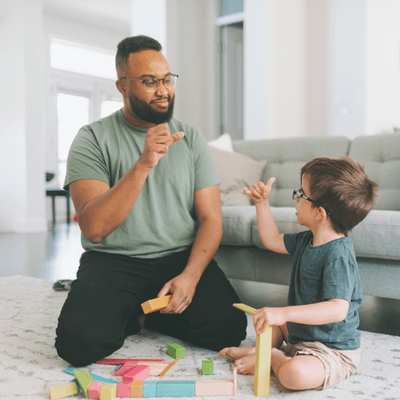
Other families may choose to use more visual supports, like American Sign Language (ASL) or augmentative and alternative communication (AAC). In these instances, the SLP will help the family learn new ways to communicate with their child and work with the family to generalize communication to a variety of people and environments.
No matter what communication modality a family and child are utilizing, SLPs will always work on areas like social communication, building vocabulary and learning accurate grammar so that children can communicate functionally in their everyday environments like home and school.
WHY BECOME A SPEECH PATHOLOGIST?
Becoming a speech-language pathologist is incredibly rewarding. Many SLPs chose this field because they wanted to make a meaningful impact in the lives of children and their families. Communication is essential for learning, relationships, and self-expression, and helping a child find their voice, whether through spoken language, signed language, or AAC, is powerful and fulfilling.
The work is both science-based and creative. It allows you to work with children and families in a variety of environments, from one-on-one, to classroom-based, to small groups in community environments. There’s also a strong sense of community and collaboration in this field, working closely with parents, teachers, other therapeutic disciplines, and medical professionals. SLPs also have the option of working in a wide variety of settings including schools, hospitals, and private practices allowing for change and flexibility in your professional career as your life changes.
how do you become a speech pathologist
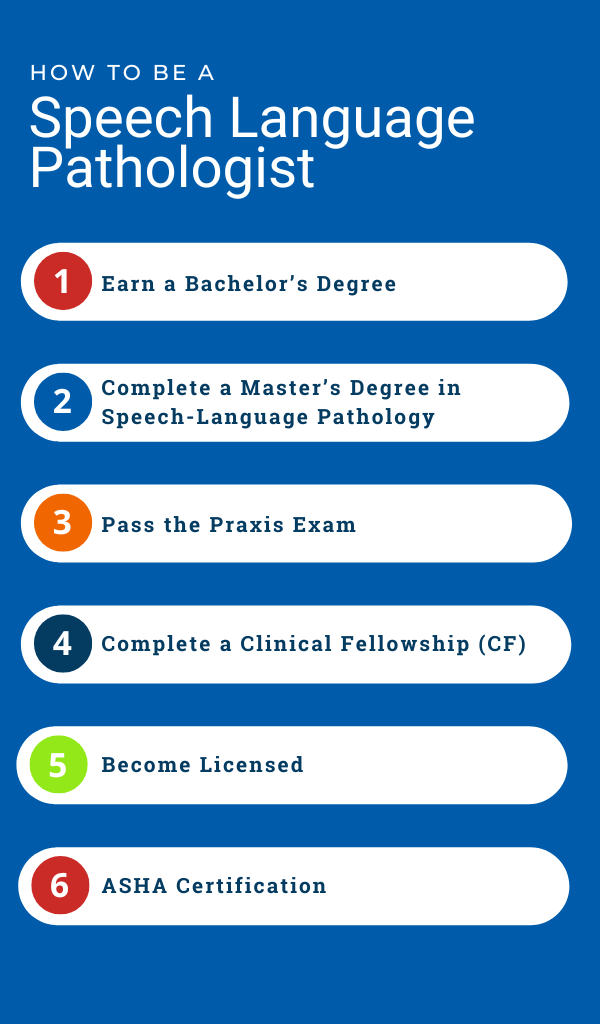

Earn a Bachelor’s Degree
While many SLPs earn their bachelor’s degrees in speech pathology or communication disorders, it’s not a requirement. Having a background in another area like child development, psychology or health sciences may serve you well in becoming an SLP. Keep in mind that if your bachelor’s degree is not in communication disorders there may be additional prerequisites required before entering a master’s program.

Complete a Master’s Degree in Speech-Language Pathology
This will include both academic coursework and clinical placements. The exact classes and the number of clinical placements will vary by program, so if you’re looking for a particular focus (like working with children with hearing loss) be sure to research programs and find the one that is the best fit for you.

Pass the Praxis Exam
The Praxis is a national exam required for speech-language pathologists in order to become licensed. Each state has their own requirements for scoring, so be sure to research your state’s requirements!

Complete a Clinical Fellowship (CF)
The Clinical Fellowship (CF or CFY) is a period of time in which an SLP can begin working in the field while still being supervised by an experienced mentor. CFYs typically last around nine months to a year.

Become Licensed
SLPs must have a valid license to practice. Each state has its own requirements for licensure, so be sure to research your state requirements.

ASHA Certification
While not required to practice in most states, many speech-language pathologists choose to pursue ASHA certification in the form of receiving a Certificate of Clinical Competence (CCC). Individuals holding a CCC are able to supervise graduate students and clinical fellows once they have met the appropriate requirements.
Some SLPs also choose to pursue additional training or specializations in areas like auditory-verbal therapy, listening and spoken language or bilingual approaches.
What are the opportunities in the field?
Speech-language pathology is a diverse and growing field with many career paths. As a pediatric SLP there are many options for setting:
- Schools: Helping students with speech, language, and social communication needs both in one-on-one and classroom based environments
- Hospitals: Providing services to children with medical or developmental conditions; both inpatient and outpatient
- Early Intervention: Working with infants and toddlers (birth to age 3) in homes or community settings
- Private Practice: Offering specialized services to children and families
- Teletherapy: Delivering therapy remotely using secure video conferencing
There are also opportunities in research, supervision, academia, program development, and advocacy. The field offers flexibility, continual learning, and a strong job outlook—especially as awareness of early childhood development and communication needs grows.
Resources & Programs
Resources
American Speech-Language-Hearing Association
Bureau of Labor Occupational Outlook Handbook- Speech-Language Pathologists
US News & World Report: Career Ranking, Reviews & Advice
Programs allowing for D/HH Focus within SLP Programs
These masters programs in speech-language pathology specifically allow for specialization, either within the program itself or in an added track or cohort to allow students to gain knowledge and skills in working with individuals with hearing loss.
New Professional Resource Downloads Now Available.
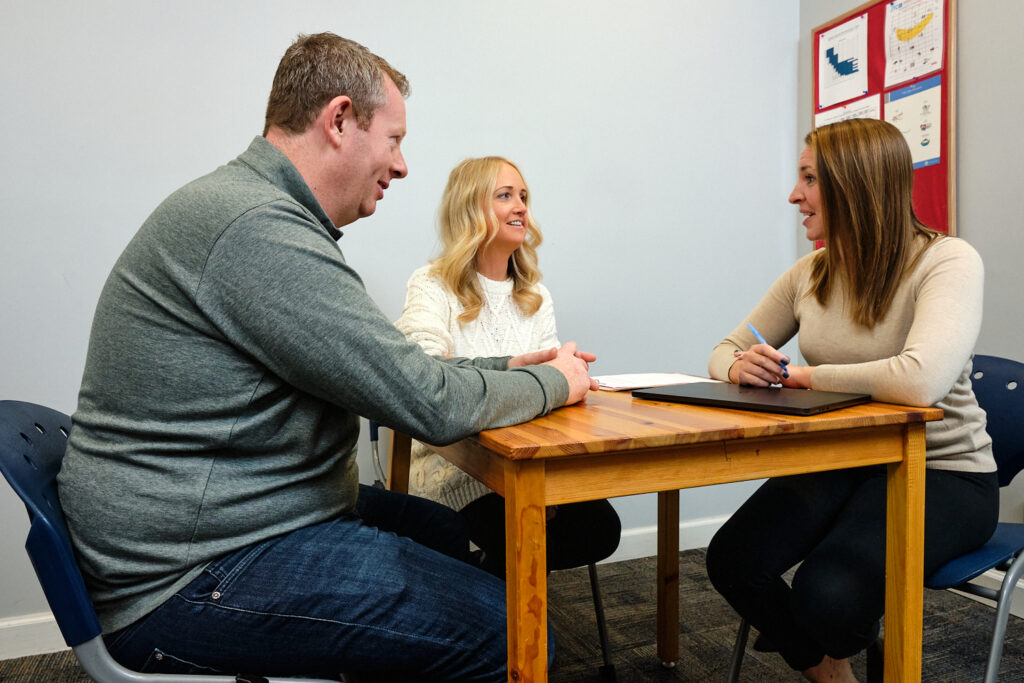
Developed by Dr. Anna Tess, our Education Coordinator and her team, our professional resources are useful tools and information for working with children with hearing loss. All downloads are in English and Spanish. Some of these resources include:
Milestones a child should achieve at different ages
Risk factors of hearing loss to be aware of
Working with students who are deaf with disability
Every contribution to FHSR helps improve the lives of children with hearing loss.
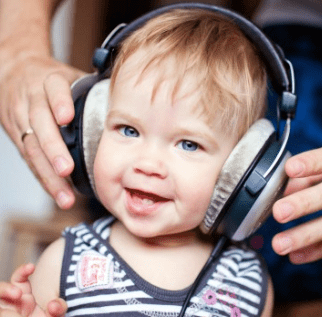
Hearing Technology is changing rapidly from captioning to cochlear implants, loops to language software. Follow our blog to learn more and donate to the Loaner Hearing Aid program to help keep the technology available for all children with hearing loss.
We hope you will consider making a gift to support these children. Thank you!